
The Circle
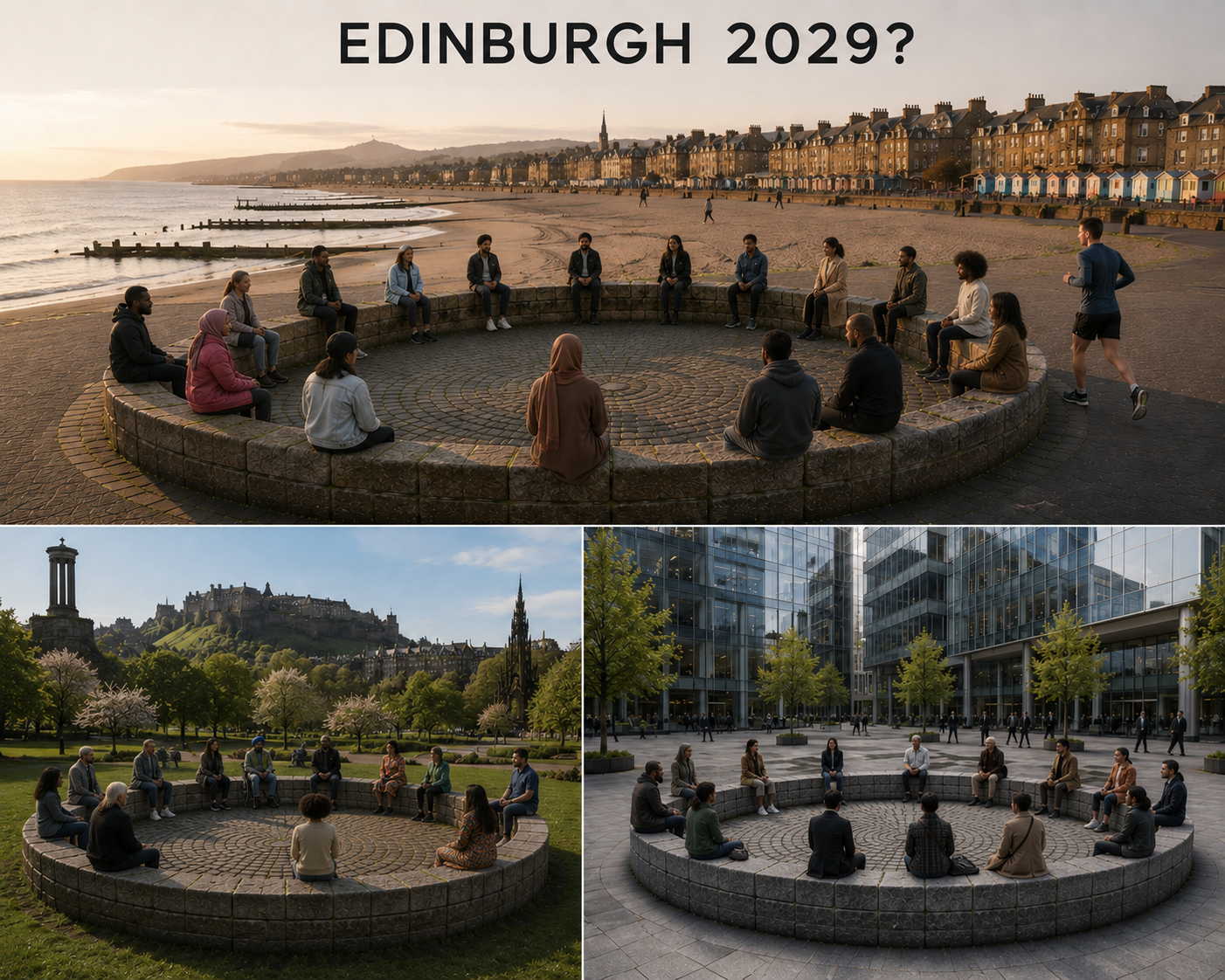
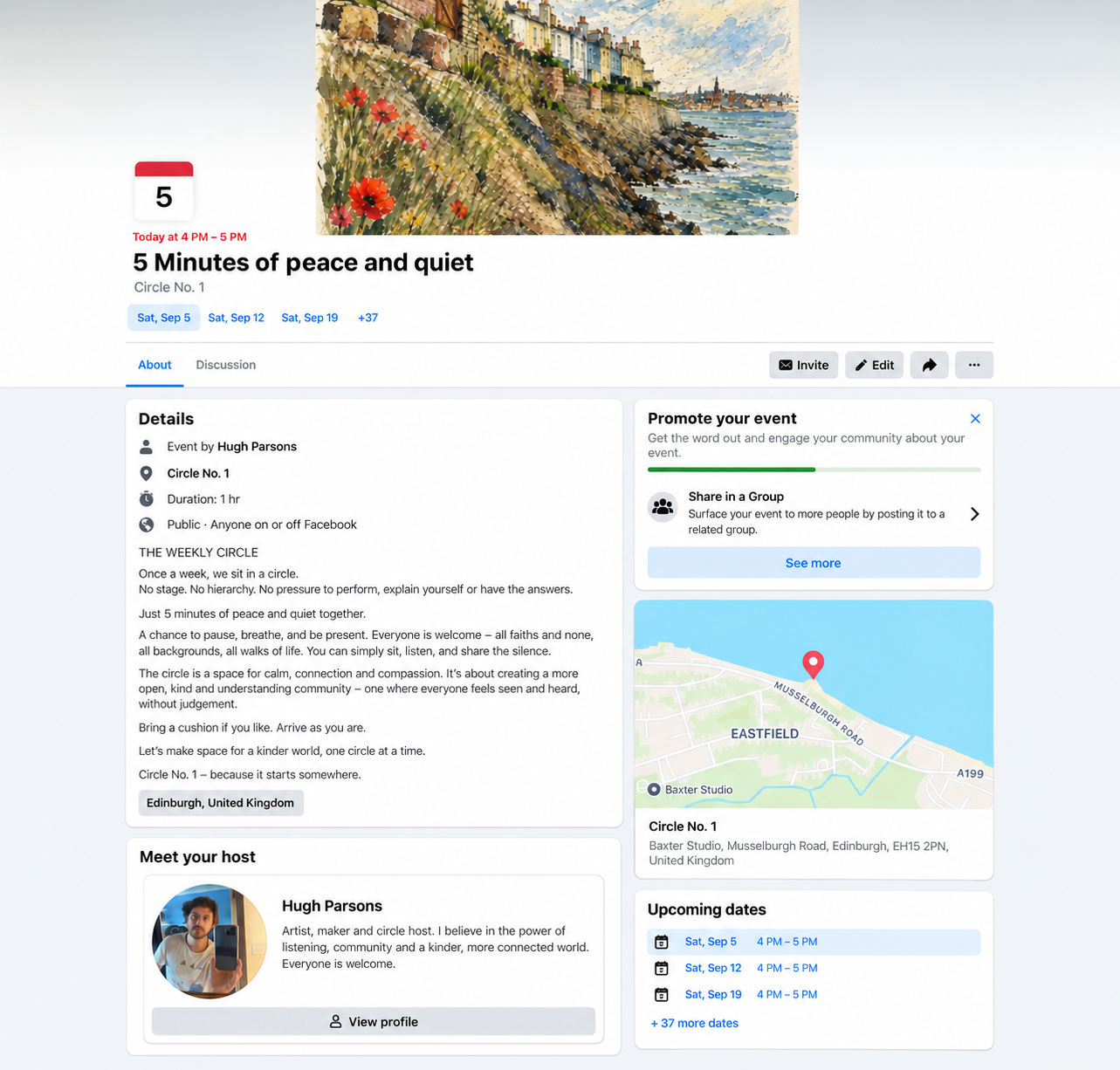
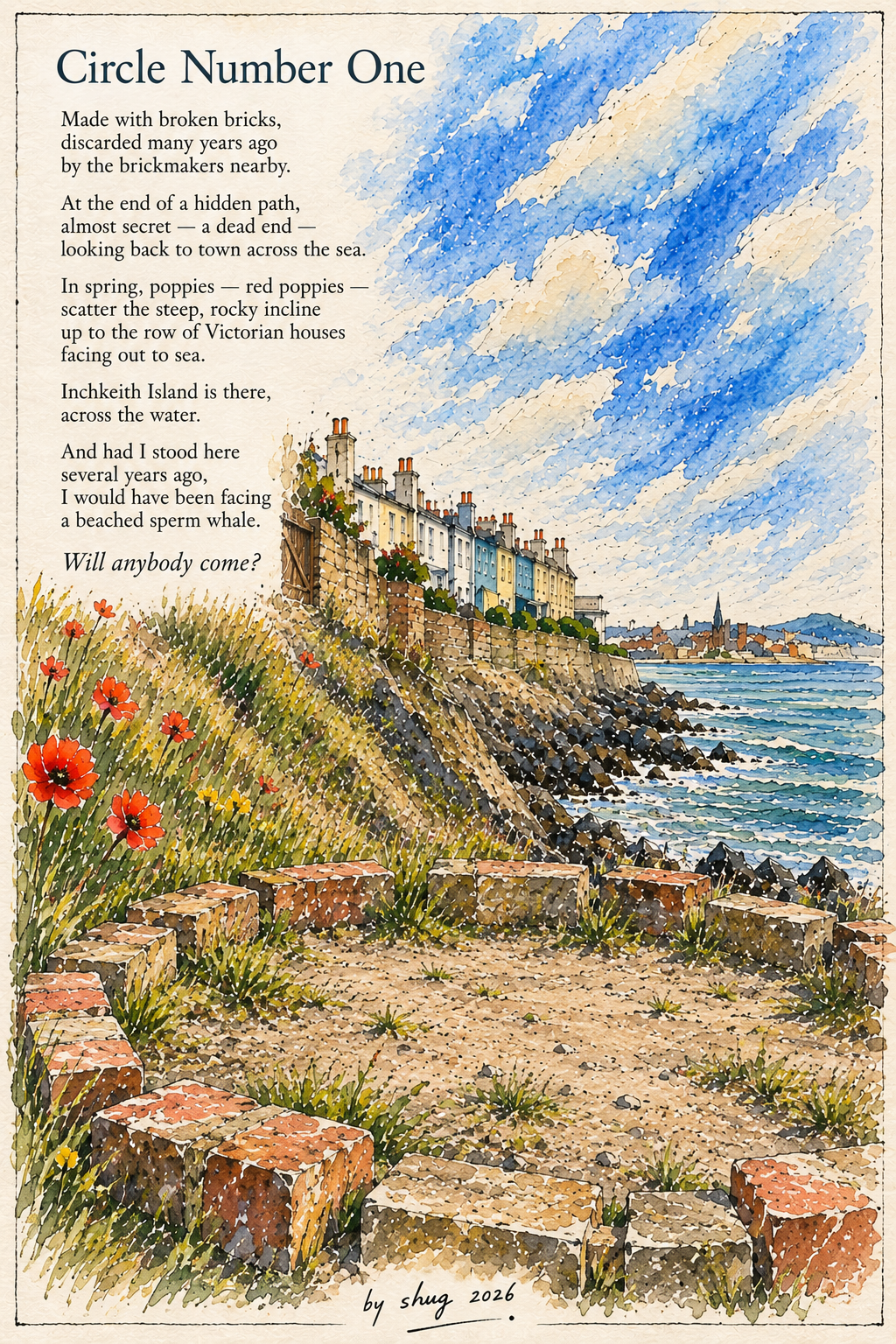

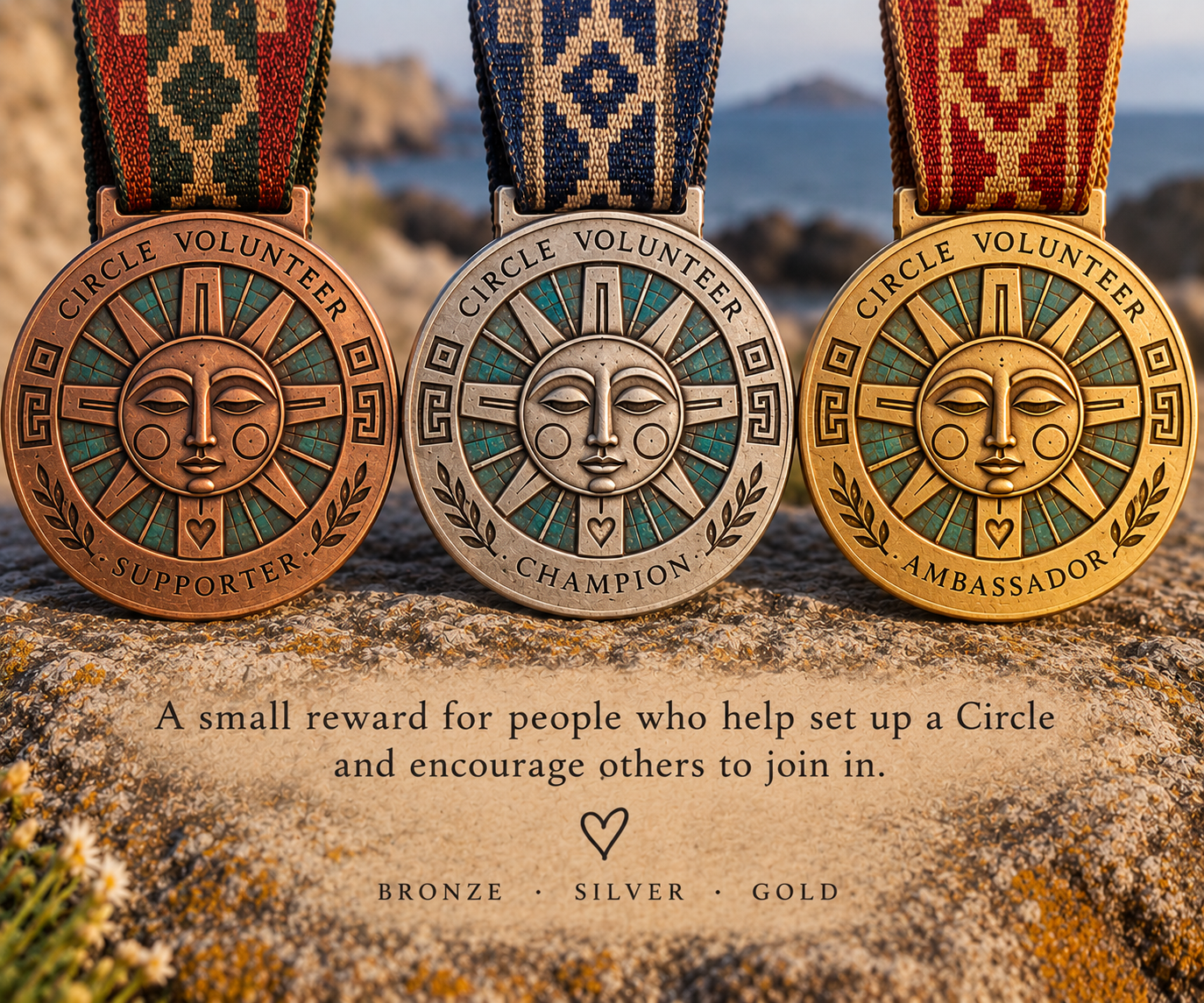
Please note - i first need to find a way to pay for these medals! Currently the physical medal is only an idea.
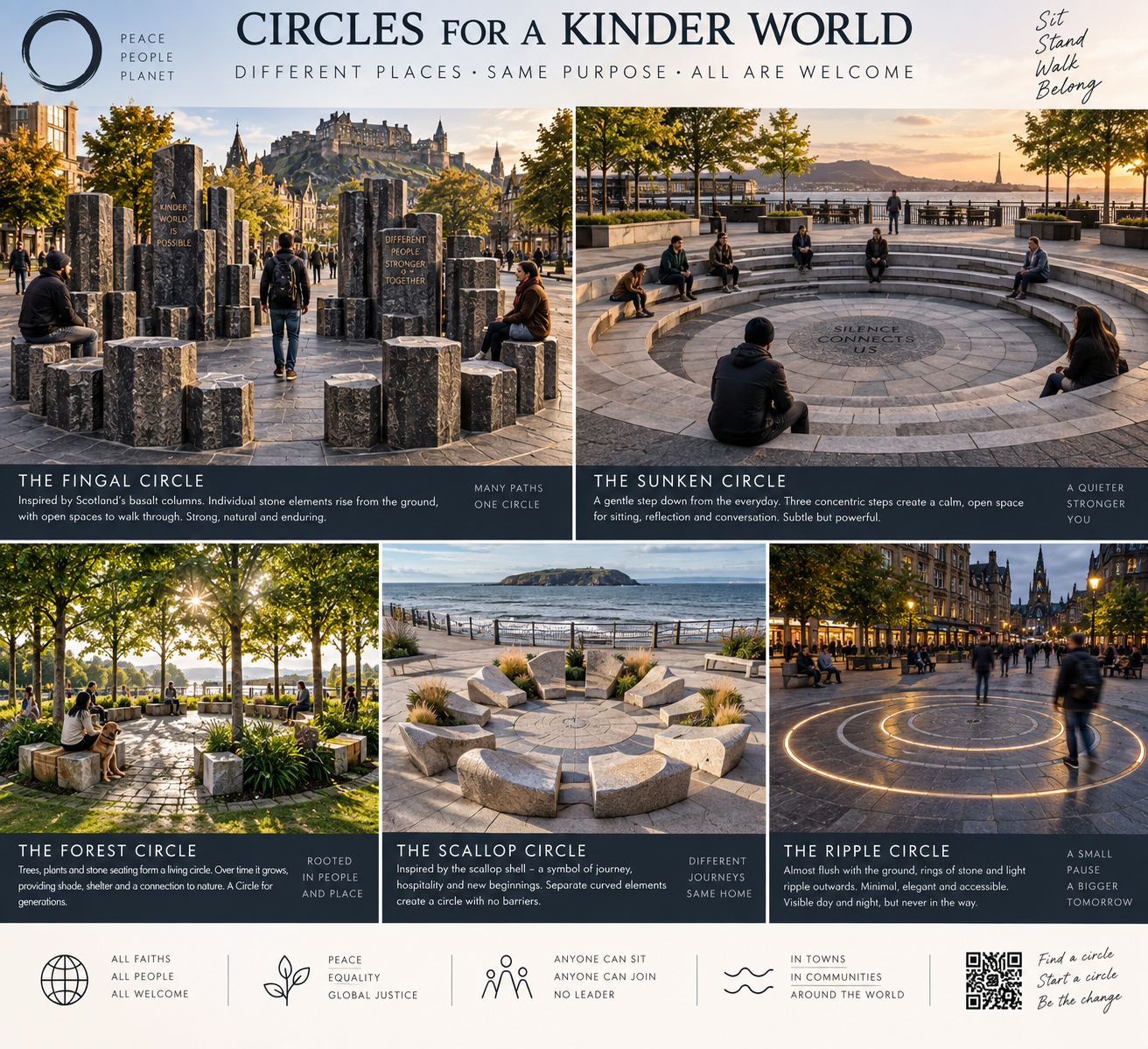
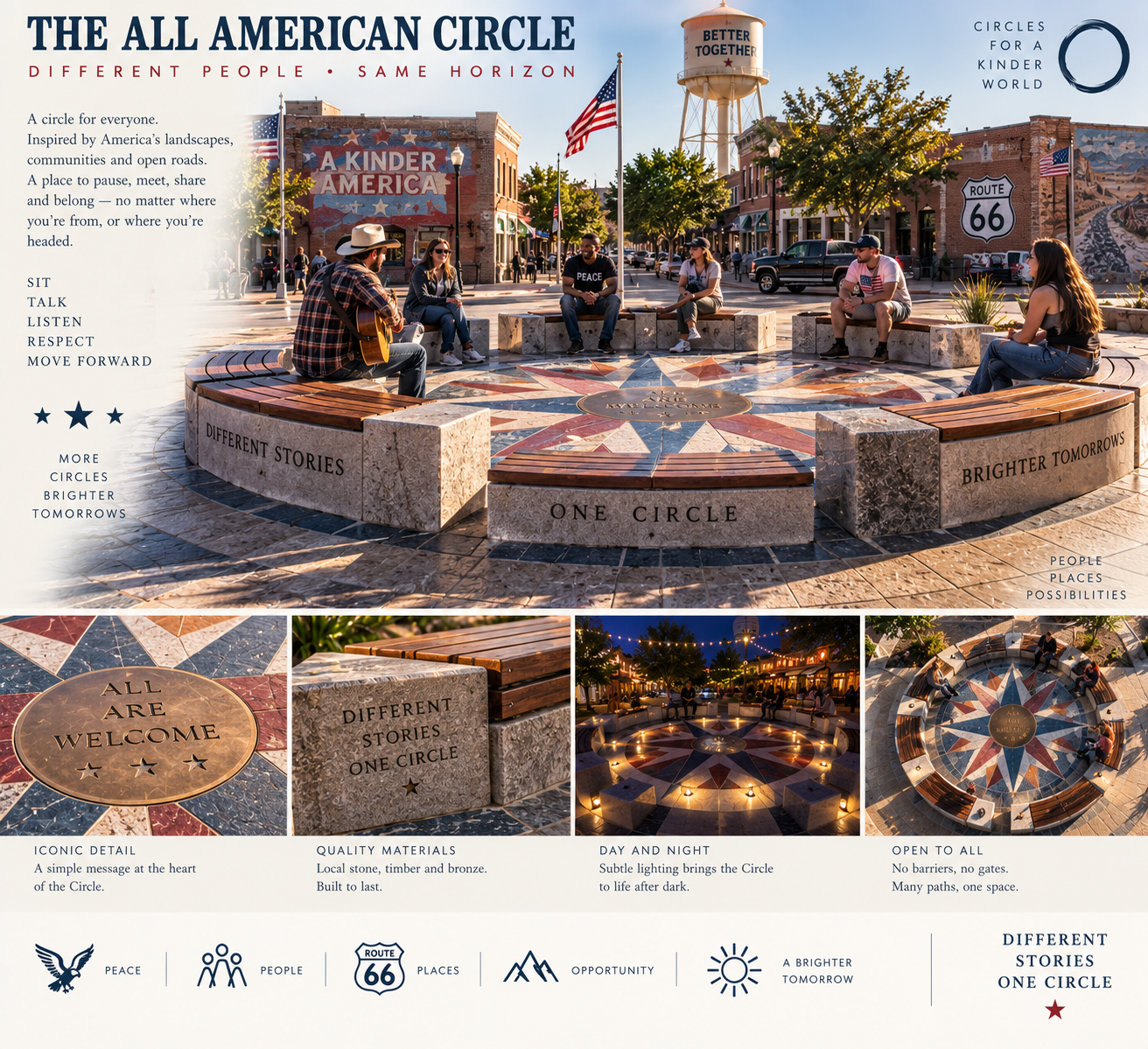
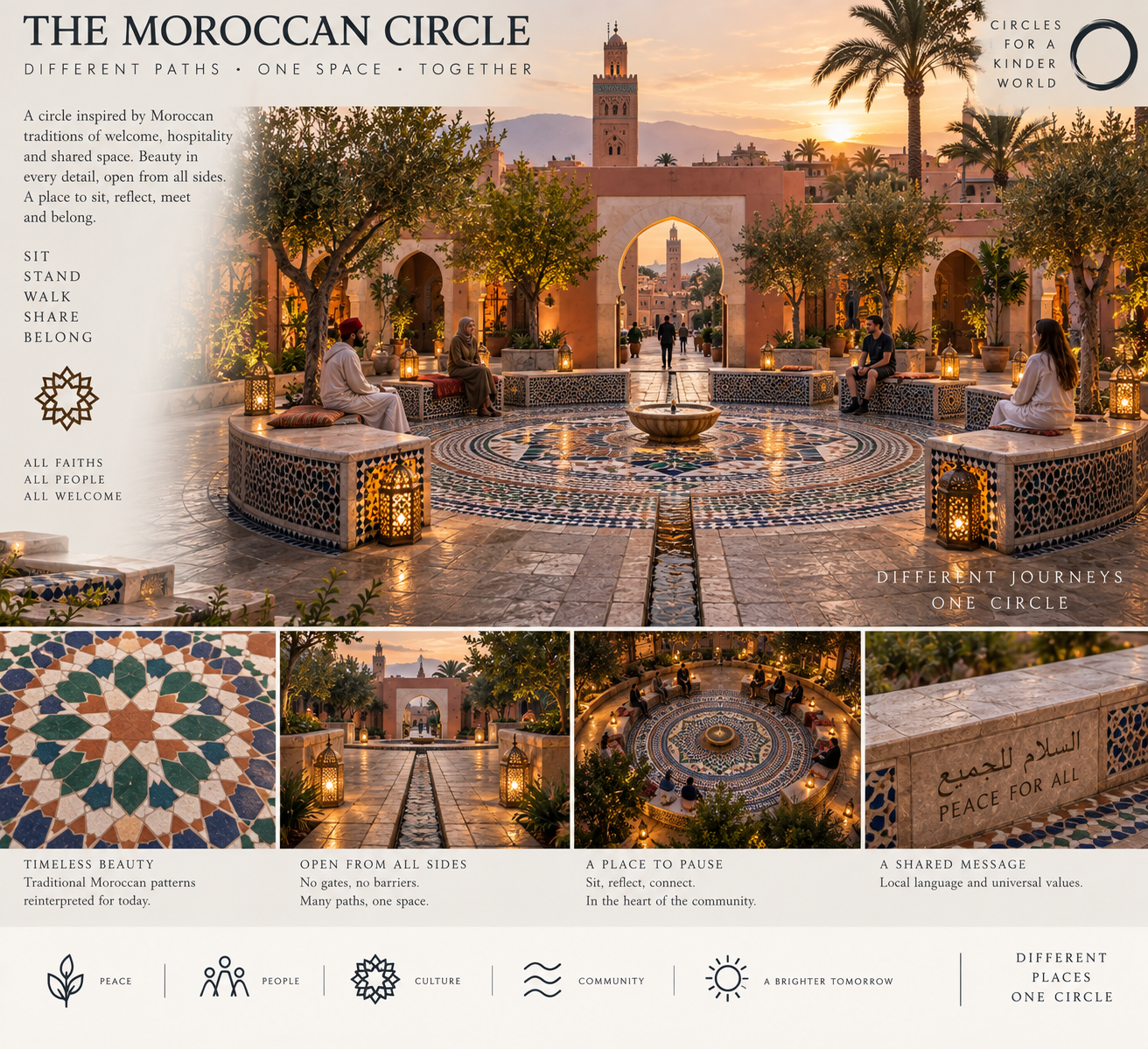
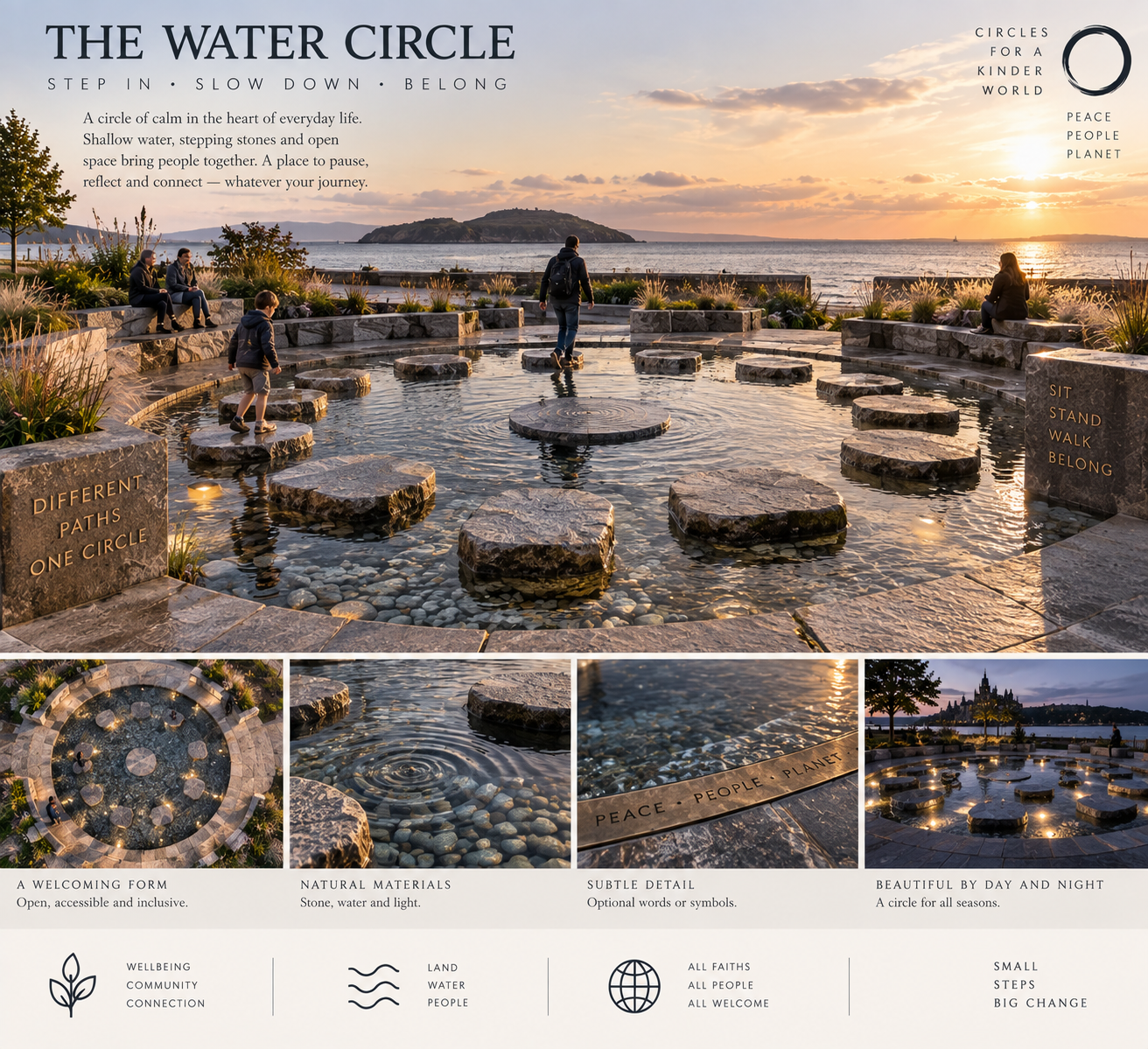
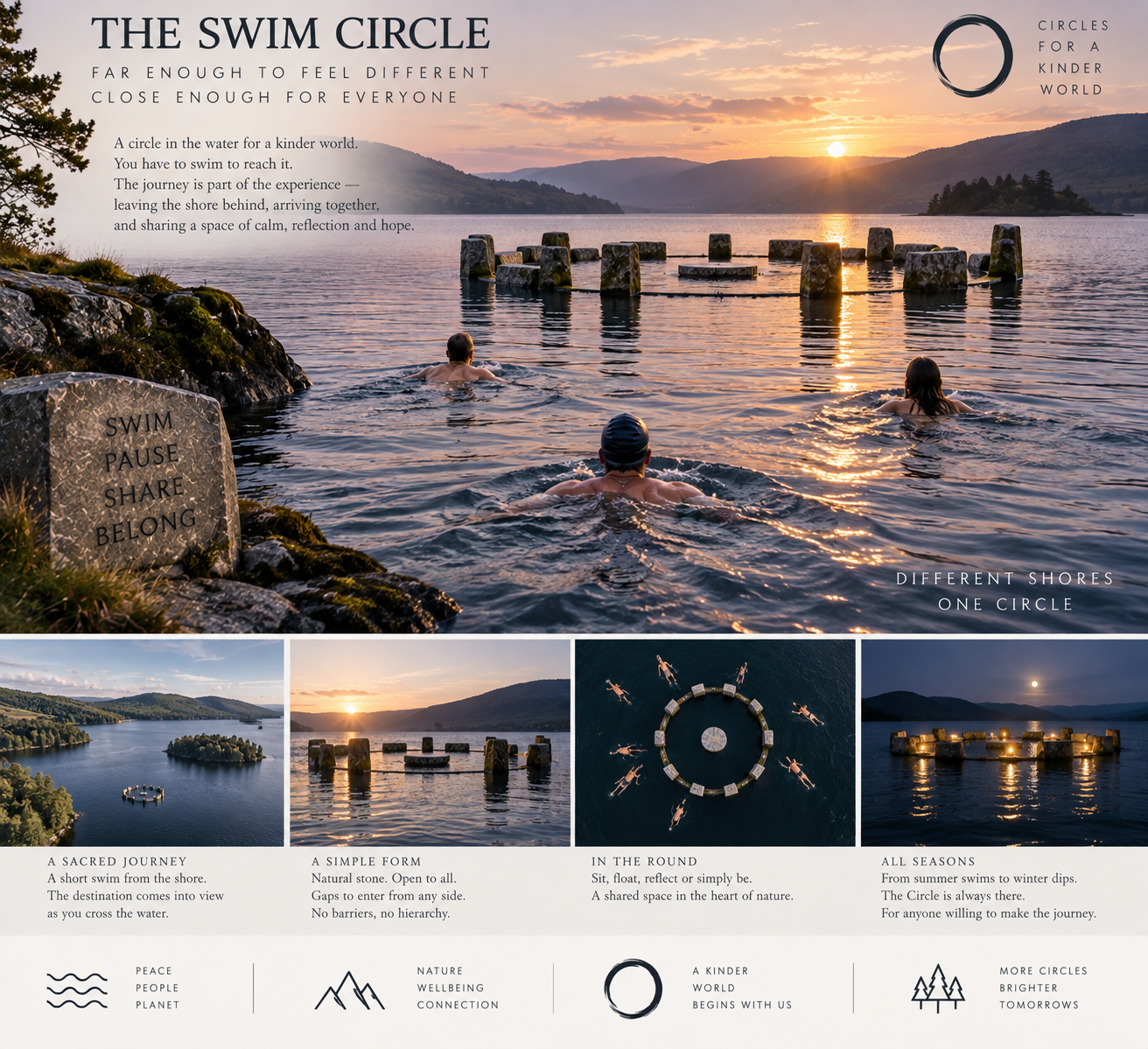
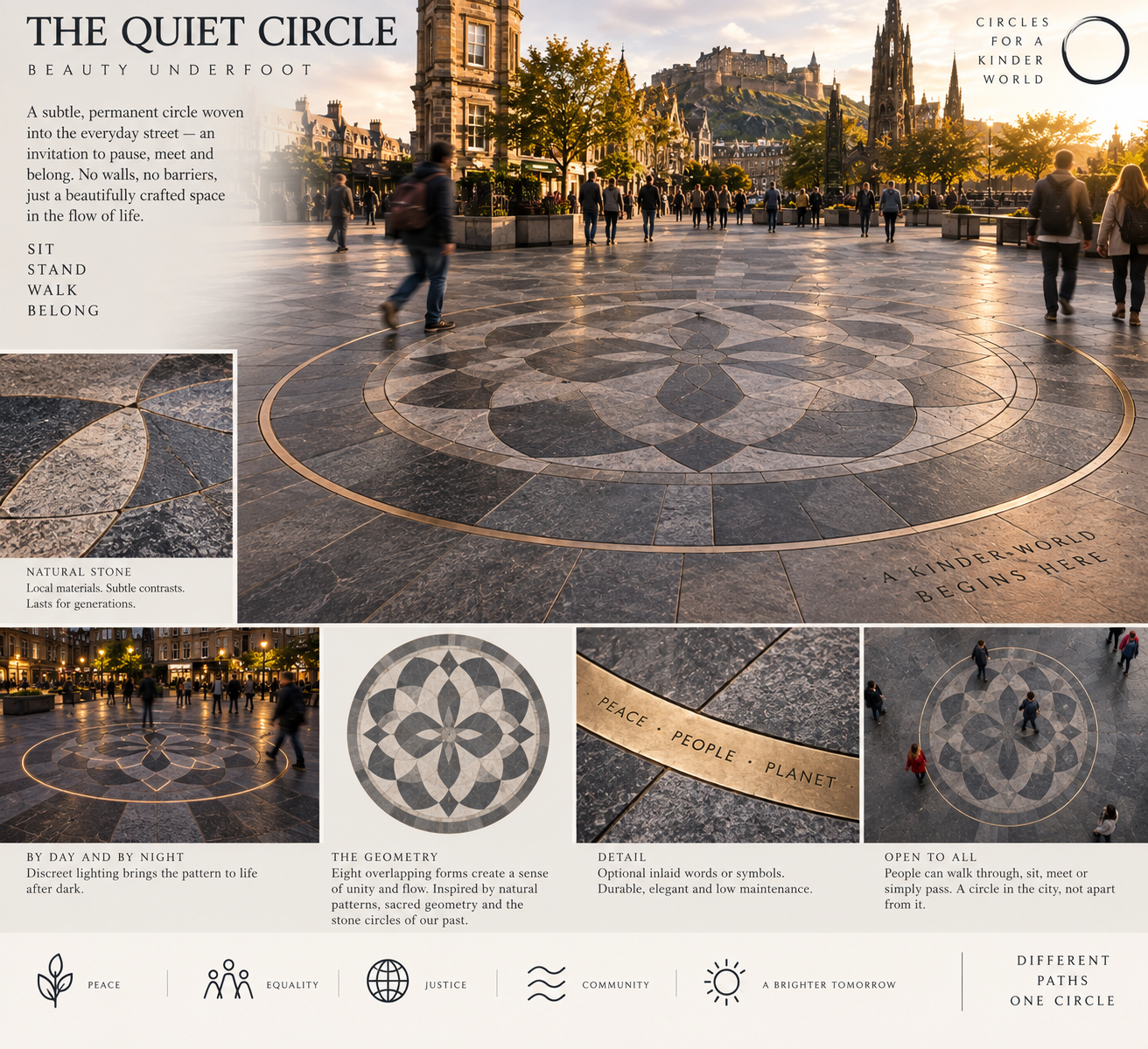
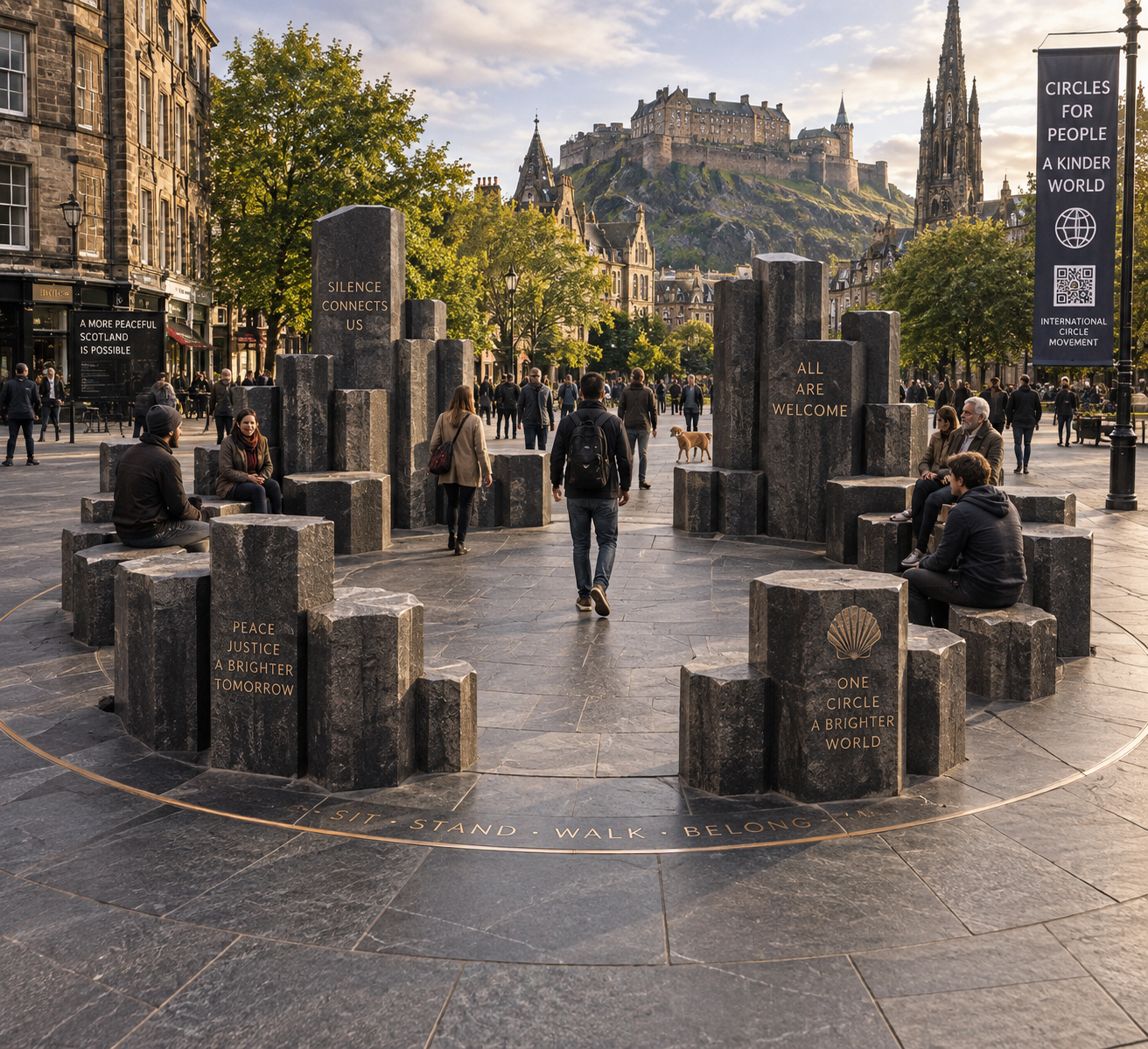
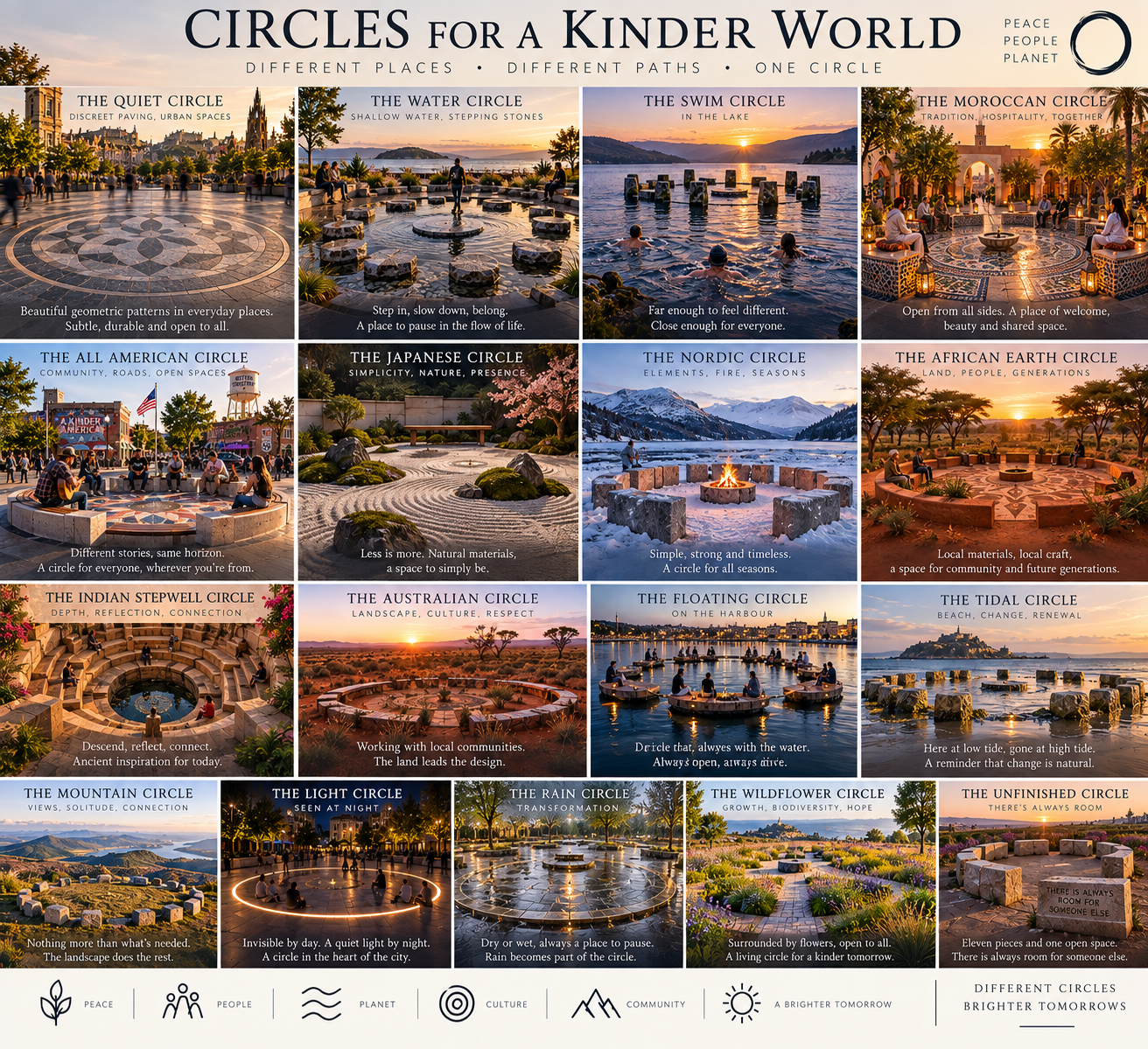
THE CIRCLE CULTURE
A hypothetical social-impact report
What might happen if a country actively encouraged a culture of sitting together?
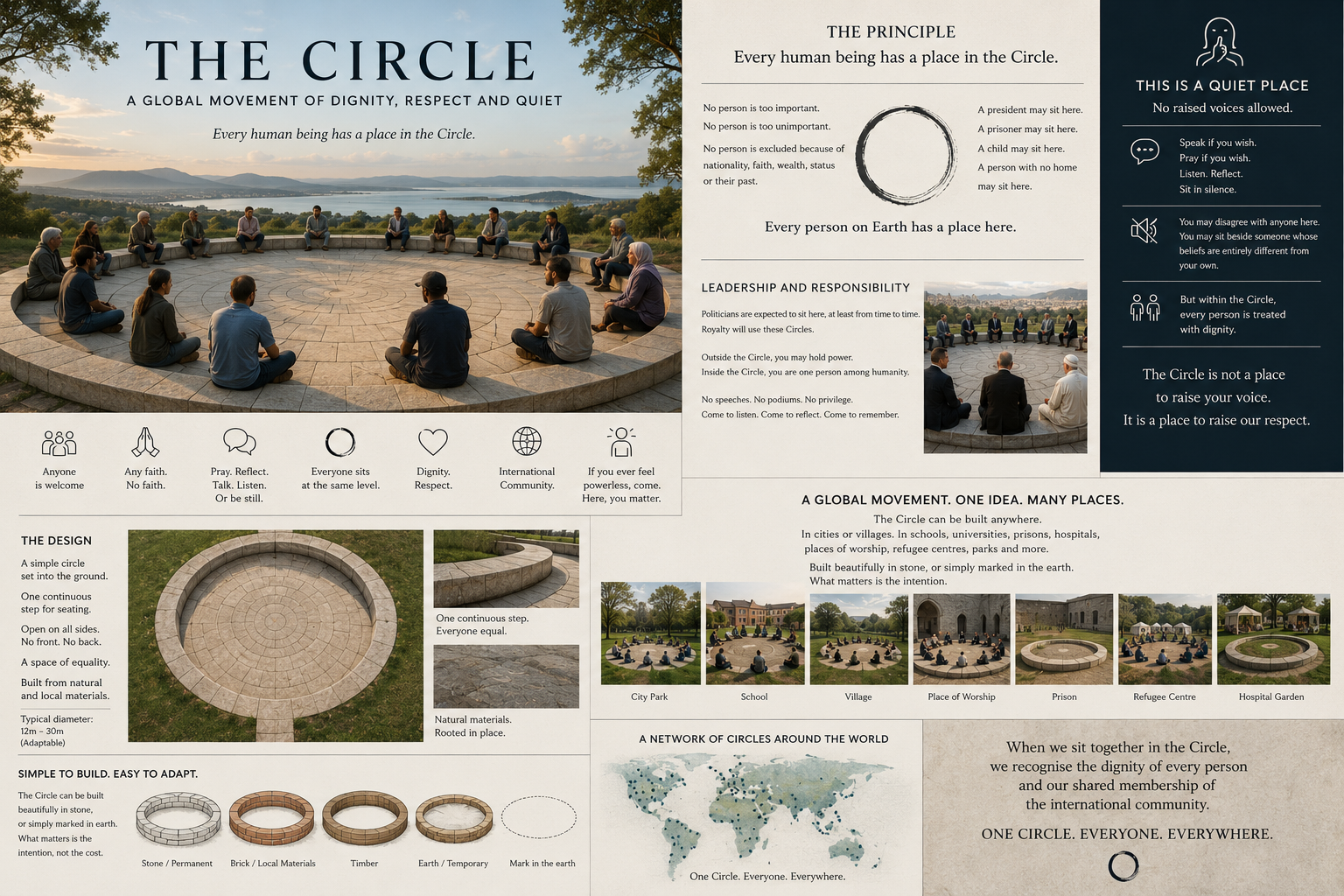
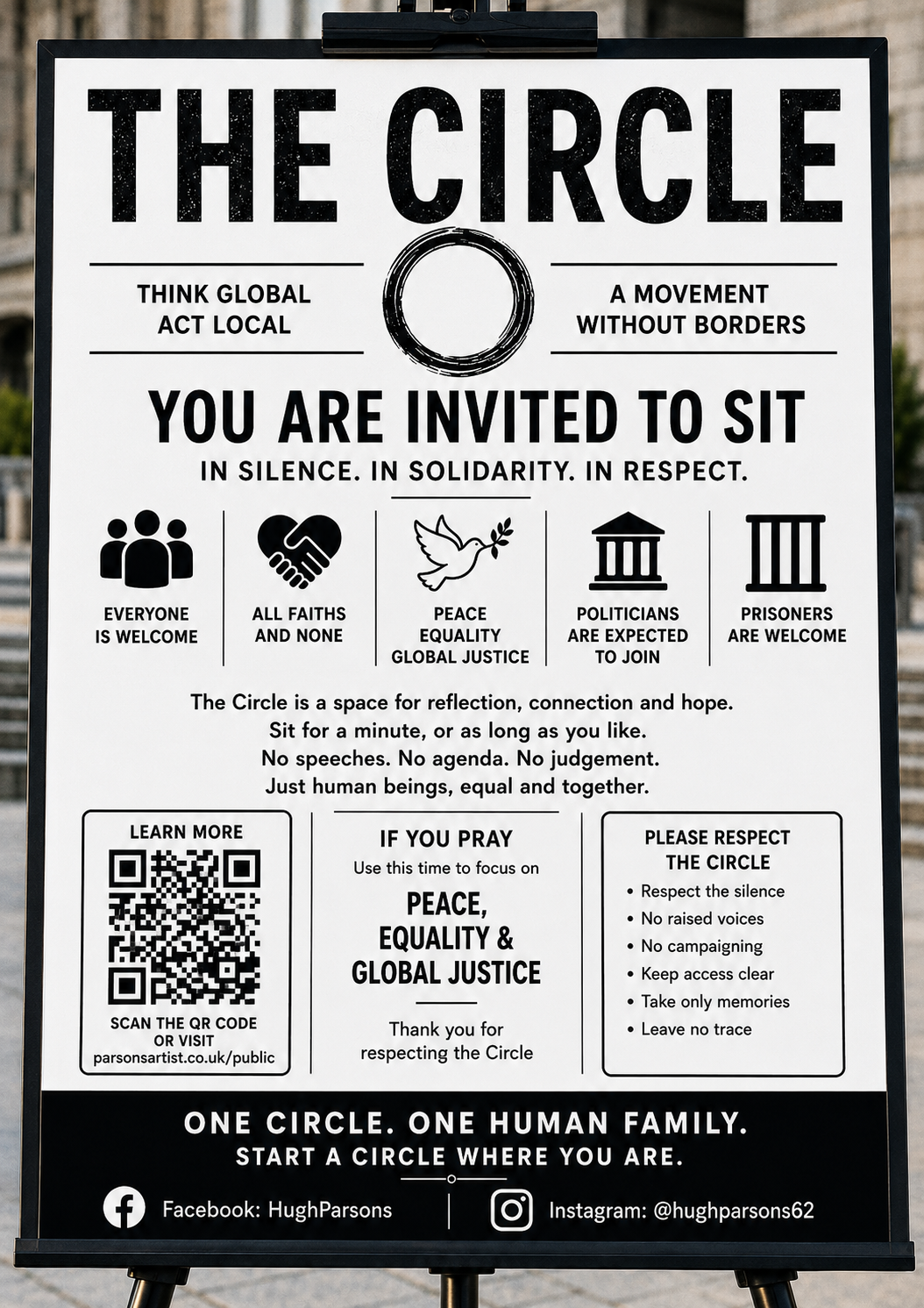
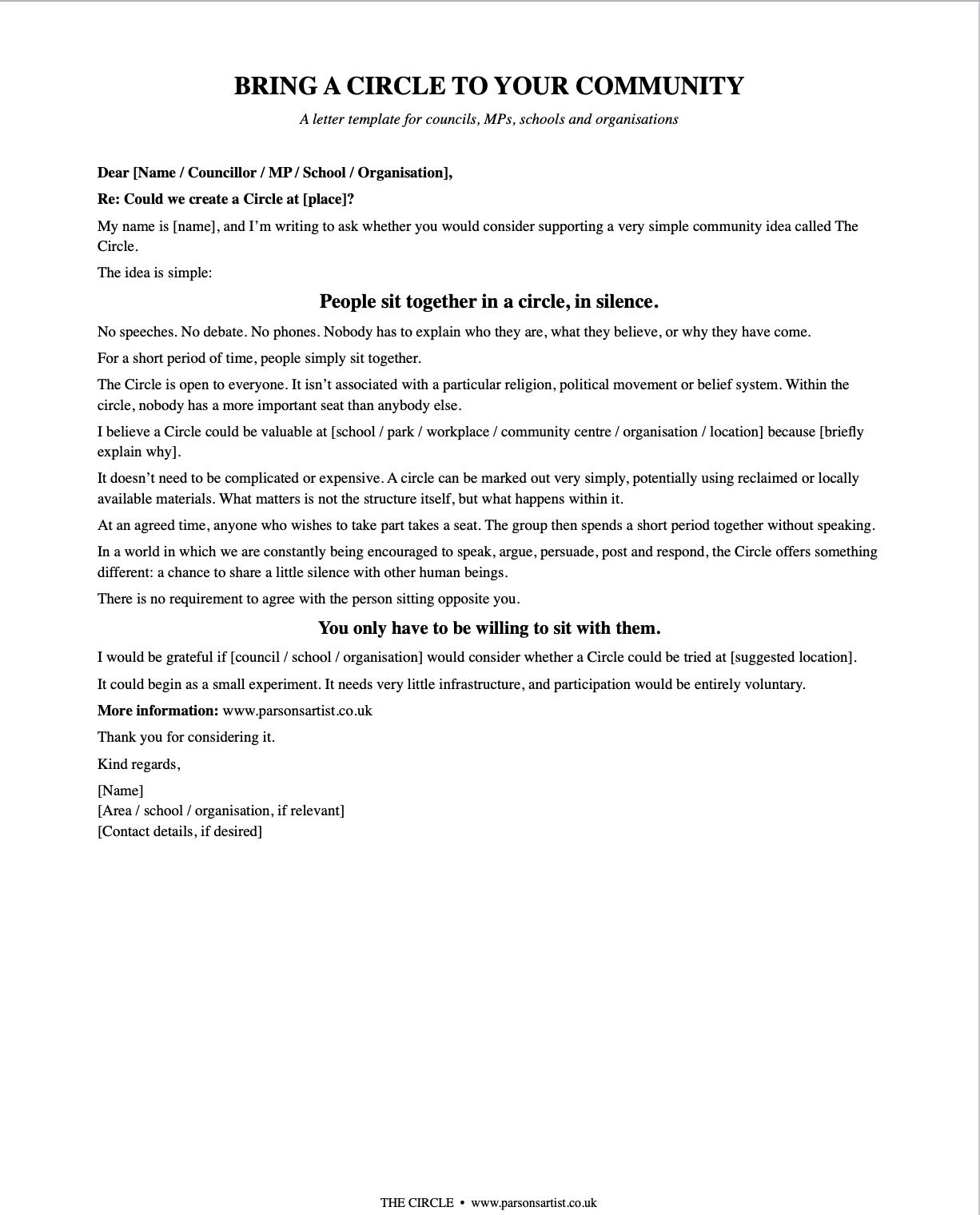
The Circle is an extremely simple proposition.
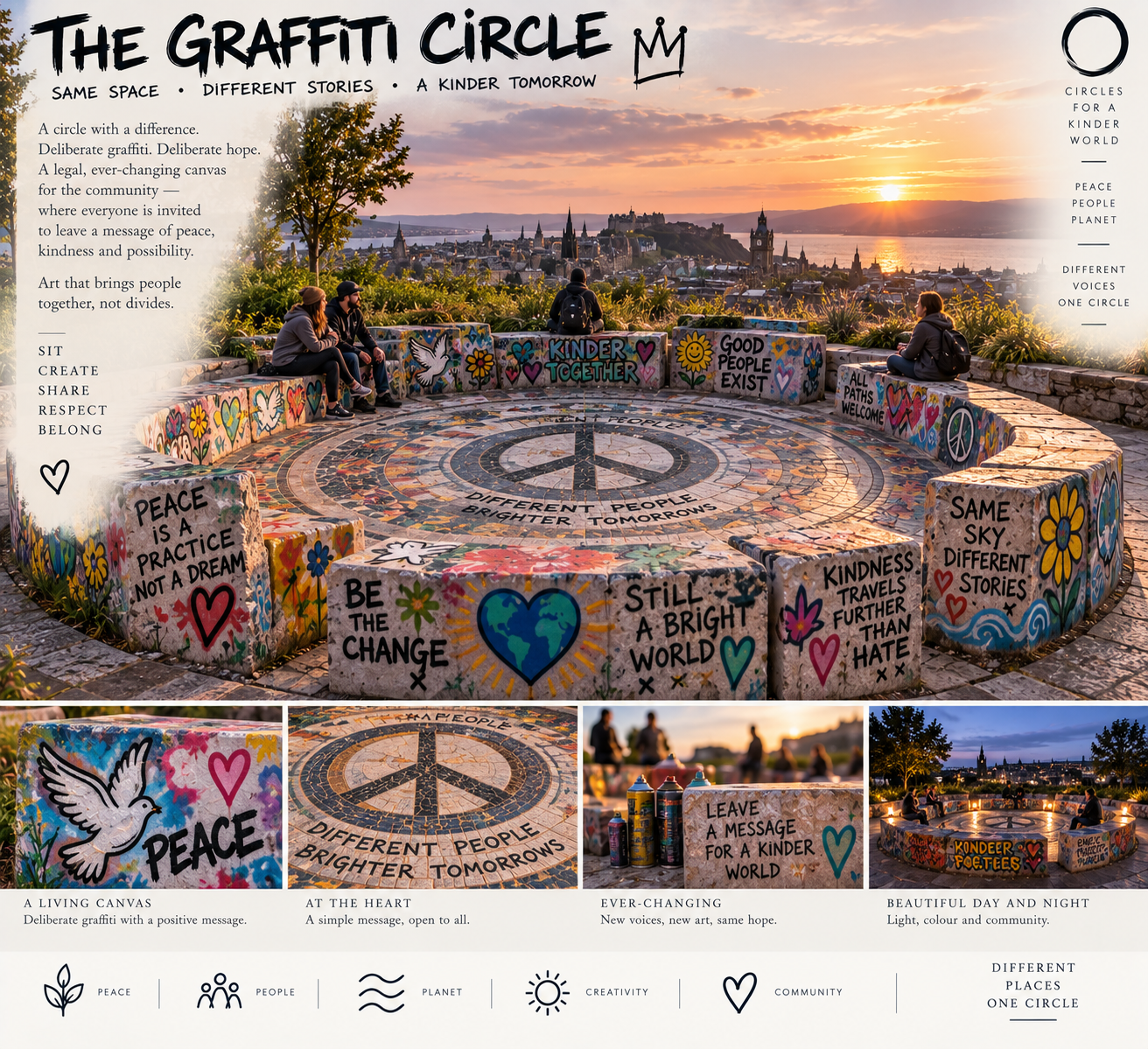
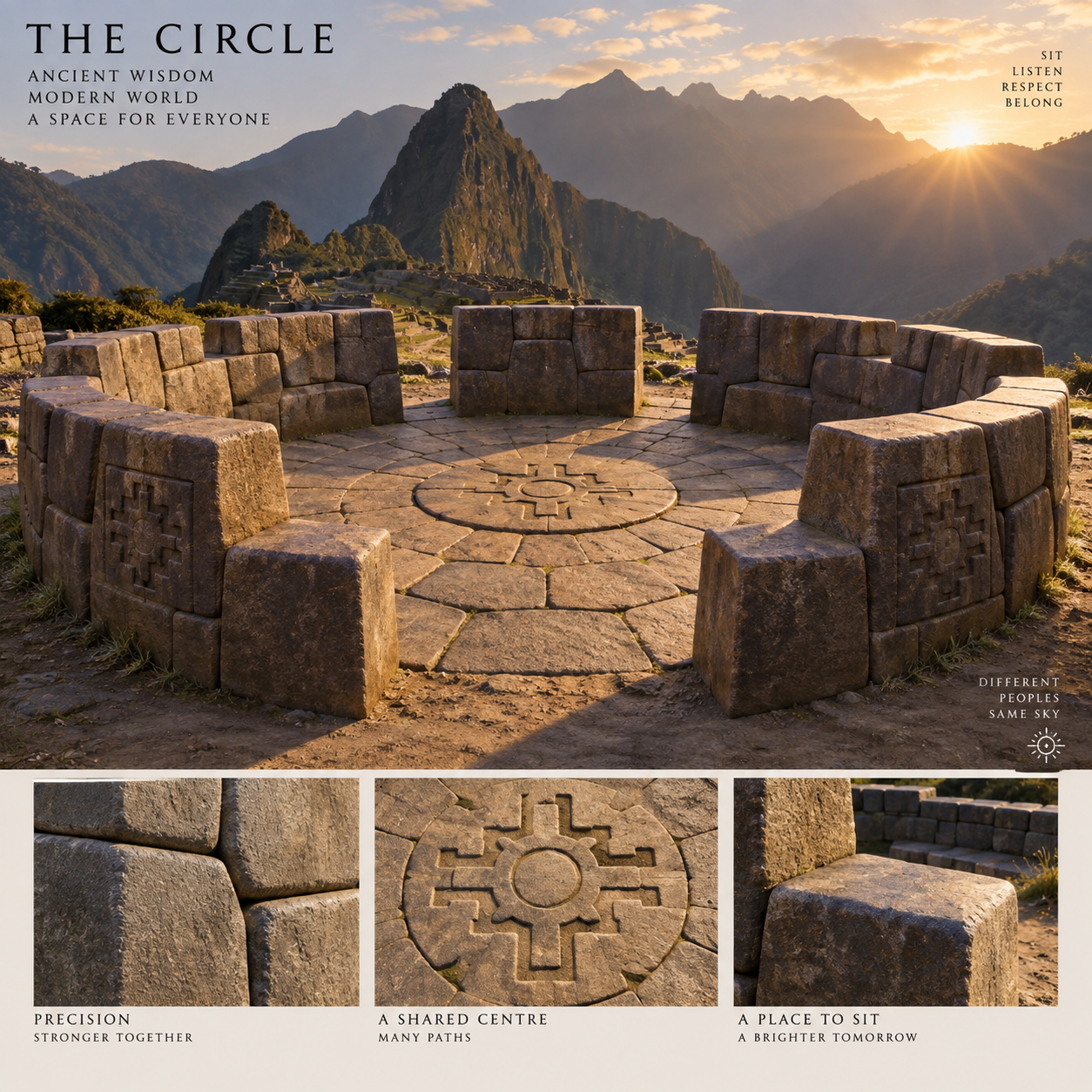
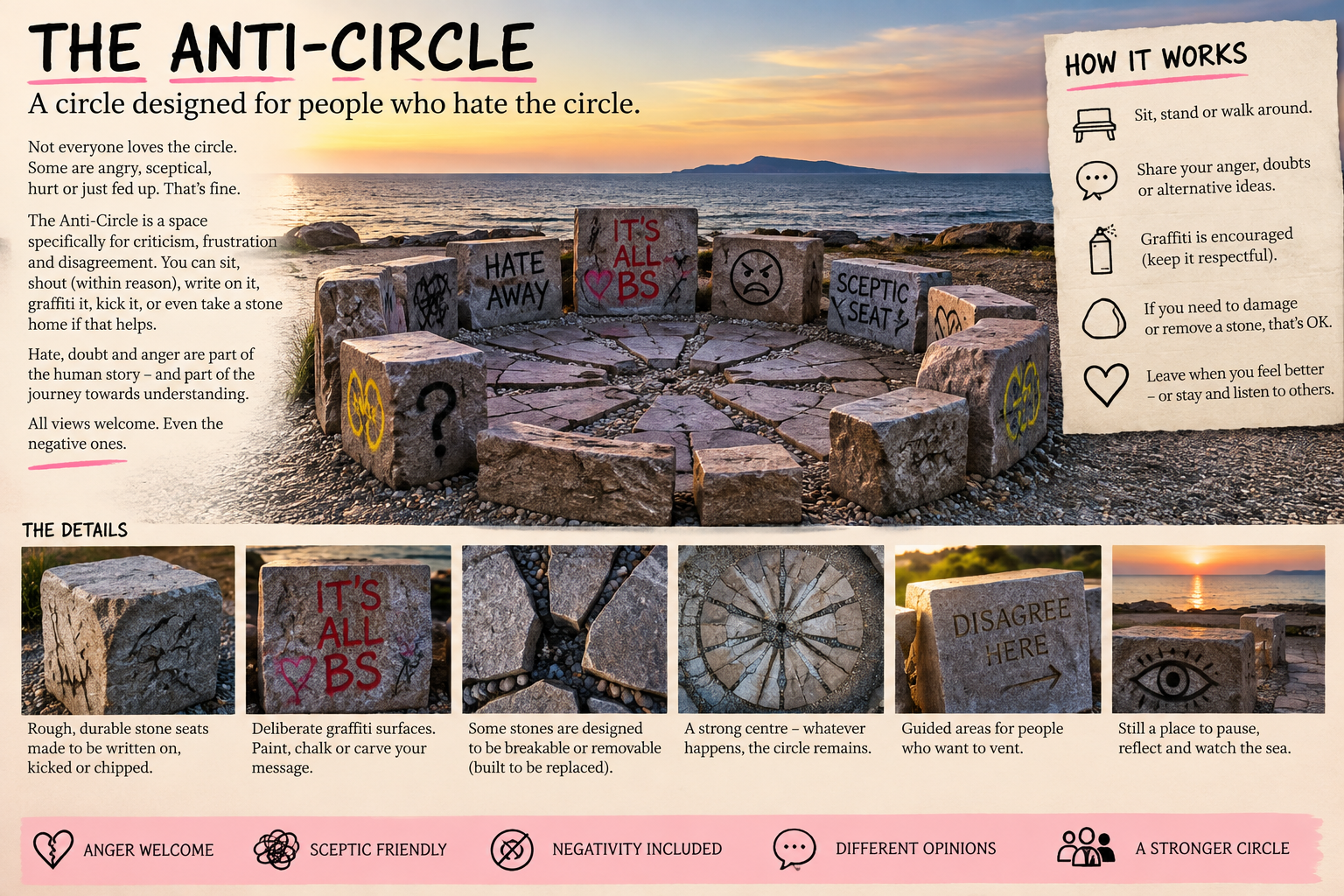
Government, councils, schools, prisons and other public bodies provide or recognise physical Circle locations: simple circles incorporated into parks, paving, public squares, schools, hospitals and other shared spaces.
But nobody owns the Circle.
There is no central authority, membership, leader, political programme or religious doctrine. The state does not tell people what to think. It simply recognises the potential social value of creating places where people are encouraged to sit peacefully alongside one another.
The culture itself belongs to individuals.
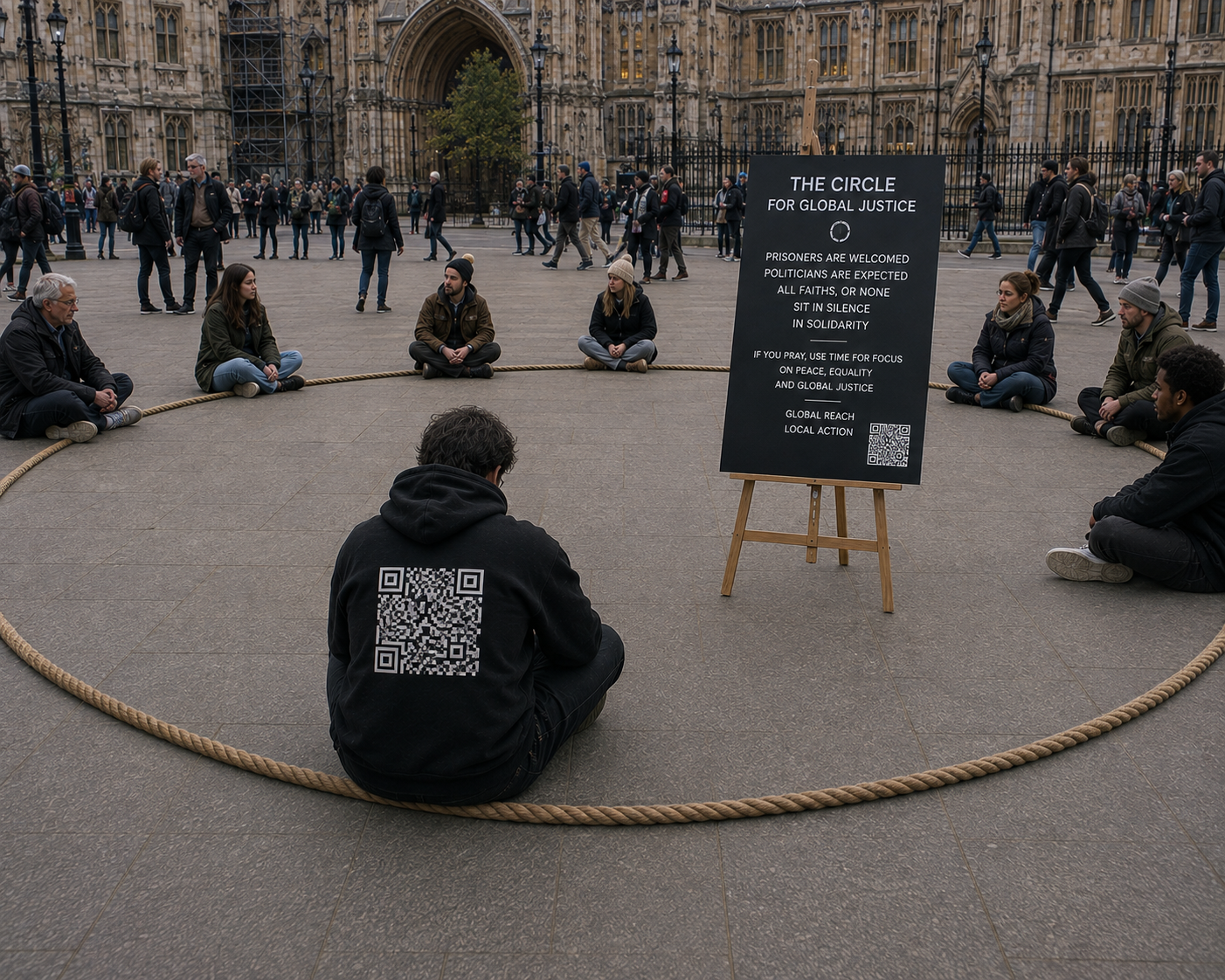
People can visit a physical Circle, create a temporary one, or simply visualise themselves joining one from their own home.
THE CENTRAL HYPOTHESIS
Modern societies spend enormous resources dealing with the consequences of isolation, mistrust, alienation and social division.
What if we also invested in something extraordinarily simple:
a culture that repeatedly reminds people that they belong to the same society?
The Circle would not replace mental-health services, policing, community organisations, democracy, religion or professional support.
It would sit underneath them as a piece of social infrastructure.
POSSIBLE BENEFITS TO SOCIETY
A successful Circle culture could potentially contribute to:
Greater belonging
More opportunities for isolated people to participate in public life without needing an invitation, membership or money.
Social mixing
Creating places where people who might rarely encounter one another can occupy the same space as equals.
Peaceful civic participation
Giving people a visible way of expressing solidarity, grief, hope, protest or concern without aggression.
Reduced stigma around loneliness
Being alone would not mean being excluded. Anyone could enter a Circle and become part of something larger.
Improved community cohesion
Repeated peaceful encounters between strangers may gradually increase familiarity and trust within neighbourhoods.
A culture of forgiveness
The practice encourages people periodically to put hostility aside—not necessarily to agree, forget wrongdoing or abandon justice, but to resist allowing hatred to become permanent.
Accessible reflection
Participation requires no equipment, subscription, belief system or special knowledge.
Intergenerational civic culture
Children could grow up regarding peaceful coexistence with people unlike themselves as an ordinary part of public life.
THE STATE'S ROLE
The state's involvement should be deliberately limited.
Enable it. Protect access to it. Never control it.
Public authorities might incorporate Circles into suitable public developments, allow communities to establish them, recognise their civic purpose and commission independent research into their effects.
They should not determine what participants believe, appoint Circle leaders, maintain membership lists or turn participation into a measure of good citizenship.
Participation must always remain voluntary.
NO AUTHORITY STRUCTURE
This is fundamental to the experiment.
A Circle is not a branch of an organisation.
Someone who creates the first Circle has no more authority while sitting inside one than somebody encountering one for the first time.
A prime minister, a prisoner, a billionaire, a child, a person sleeping rough and the person who designed the Circle all occupy exactly the same ground.
The physical design communicates the principle:
there is no head of a circle.
WHAT SHOULD ACTUALLY BE MEASURED?
If governments were interested in the idea, the sensible next step would not be to proclaim that it works.
It would be to test it.
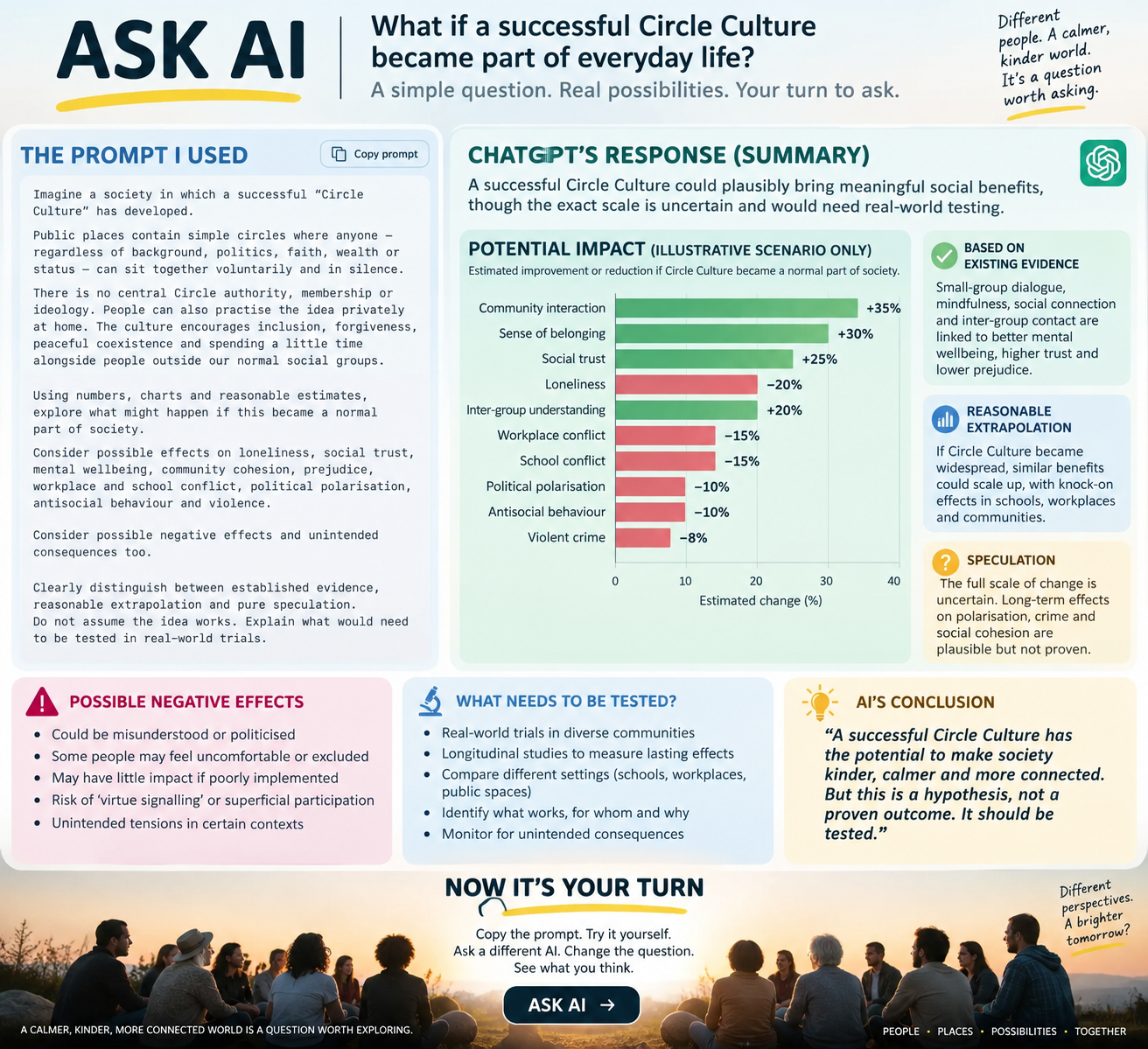
Pilot communities could independently measure participation, perceived loneliness, sense of belonging, attitudes towards people from different backgrounds, community trust, antisocial behaviour around Circle locations, participant wellbeing and attitudes towards peaceful civic participation.
Researchers should also actively look for negative or unintended effects.
Does the Circle attract antisocial behaviour? Do some communities perceive it as political or religious? Do certain groups feel less welcome? Does initial enthusiasm disappear? Does a permanent installation work better than an informal temporary Circle?
A serious experiment must be capable of discovering that parts of the idea are wrong.
THE BIGGER POSSIBILITY
The most interesting outcome may not be something that appears immediately in statistics.
Culture is created through repeated behaviour.
If millions of people repeatedly practise the idea that strangers, opponents, outsiders and people with radically different lives can occupy the same Circle peacefully, that principle may gradually become part of the culture itself.
The Circle therefore asks a surprisingly large question through an extraordinarily small intervention:
Could regularly practising peaceful coexistence make a society better at peaceful coexistence?
Perhaps.
The purpose of the experiment is to find out.